Oct. 28, 2026 Featured
Social Action at the Heart of a National Seminar, 3–4 October 2026
47 participants, 5 regions, 2 days of consultation — A look back at a gathering that brought social action actors together around one central question: how can communities truly become protagonists of their own progress?
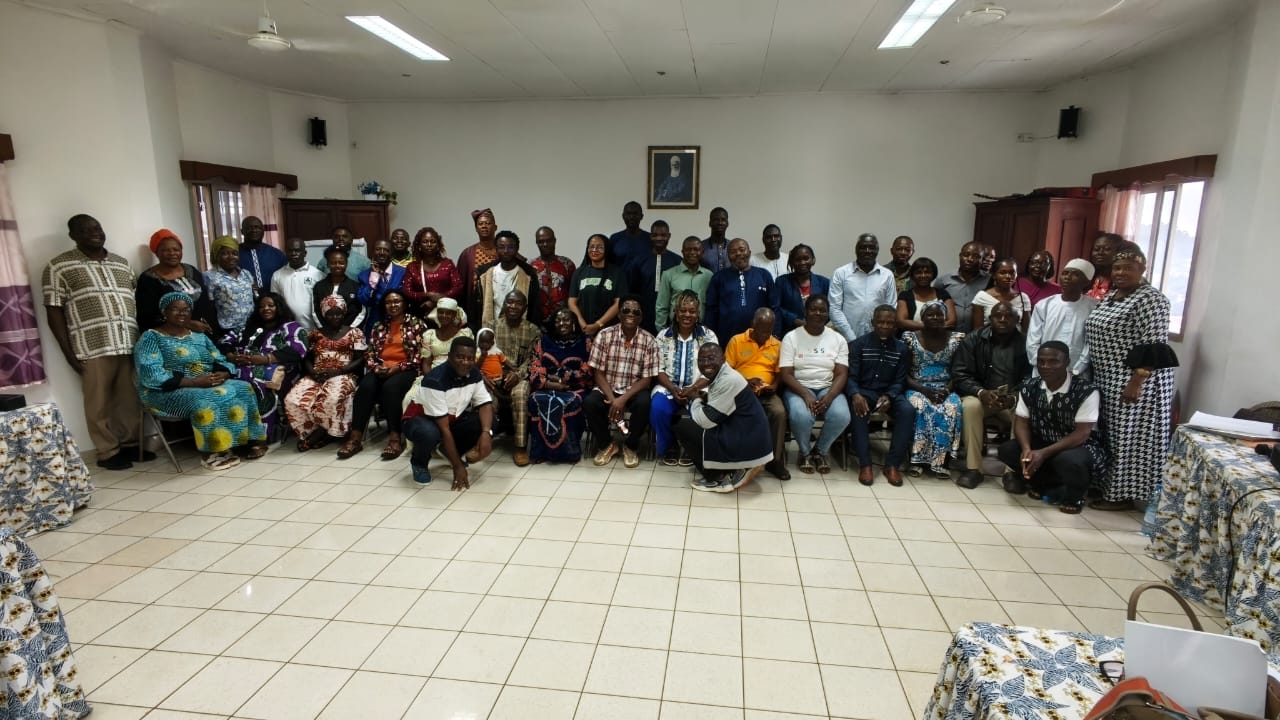
On 3–4 October 2026, Yaoundé hosted the national seminar on social action. The aim was not to promote a single model, but to create a space for study and reflection where each participant could examine their initiative in light of the guidance of the Universal House of Justice.
The fields represented reflect the diversity of engagements: education, agriculture, the environment, health, women's advancement, youth accompaniment, and the translation and dissemination of Bahá'í texts in local languages.
The Three Protagonists of Change
The first day, led by Mr. Djoulde William, laid out the conceptual framework around three interdependent actors: the individual, the community, and the institutions.
The capacities to be developed were identified:
- Consult together and seek a common understanding of reality
- Read the reality of society and discern a population's needs, strengths, and resources
- Design lines of action suited to existing capacities
- Generate, apply, and share knowledge gained from experience
- Cooperate in unity and learn systematically from action
Three Experiences That Speak for Themselves
1. Strengthening junior youth reading skills (Yaoundé, 2017)
Mrs. Ngo Nyem Nathalie was animating a group of junior youth, several of whom had serious reading difficulties. She gradually designed small story booklets highlighting specific qualities. The progress observed drew the attention of teachers, then other young people. The organization ARCADE grew out of this effort. When some parents raised concerns about possible indoctrination, the animator refined her approach and materials. Today, teachers use these materials in their own classes.
2. Cleaning up the neighborhood with used buckets (Yaoundé, 2022)
The junior youth group animated by Ali Tiati chose to clean certain streets. Noticing that the places became dirty again, the youth wanted to install waste containers. Since the cost of garbage bins exceeded their means, they collected used buckets from their own households and placed them at strategic locations. A concrete illustration of the cycle: read reality, act, recognize limitations, consult, adjust.
3. Ginger from organic waste
A group of young people wishing to carry out a service project considered, after consultation, using organic waste to grow ginger — a relatively rare and expensive product on the market. The idea combined service, creative use of local resources, and a contribution to their educational needs.
The Role of Bahá'í-inspired Organizations
An important reminder was addressed to leaders of associations presenting themselves as Bahá'í-inspired: the National Spiritual Assembly must be informed of their existence and development. A regular relationship, with reports on activities and financial management, is recommended to preserve the integrity of the approach.
What Next?
Counselor Djouldé Alain Pierre invited participants to continue studying the materials of the P.A.S. program, the institute books — notably Book 13 (the Bahá'í approach to social action) and Book 11 (wealth and Huqúqu'lláh) — and branch materials.
The representative of the National Spiritual Assembly encouraged contributions to collective efforts: the raising of the House of Worship in Batouri and the construction of the multipurpose Centre in Yaoundé.
The next step? Accompany these efforts without rushing them, systematically document learnings, and create spaces where they can be examined, compared, and shared.